
There’s no such thing as a system without culture. The moment two people start interacting more than once, they begin forming patterns. Shared expectations. Unspoken norms. Behavioral feedback loops. That’s culture.
You don’t need a handbook, a value statement, or a town hall to make it real. Culture is already happening. Culture is the DNA of your business. You can't exactly see it, but it dictates everything that happens. The only question is: do you understand it, and are you shaping it on purpose?
How Culture Forms: Fast or Formal
Culture forms in two ways - quickly (a.k.a. informally) or more slowly (more formally).
Informal culture forms instantly. People enter a room or an office (what we business psychologists call “a system”) with a mix of conscious and unconscious goals. They try out behaviors that help them meet those goals. If a behavior works - gets attention, avoids conflict, drives status - it gets reinforced. And that behavior becomes part of the system’s cultural code.
If being polite gets results, politeness becomes the norm.
If being standoffish gets your needs met, coldness becomes part of the operating style.
If emotional reactivity gets attention, welcome to a reactive culture.
Your brain is always scanning for what works. It leans on past experience, social prediction, and live feedback loops.
Ahhh – but here’s the catch: we don’t always interpret the feedback accurately. People might be authentic, guarded, manipulating, placating, or just inconsistent. So the feedback is messy. But even flawed reinforcement still reinforces behavior. And that’s enough to set a tone quickly!
Formal culture, on the other hand, shows up later. It’s the company handbook. The onboarding video. The mission on the wall. The values slide deck. It’s what we say we value. But often, it’s wishful thinking.
Because when formal culture and informal feedback clash, informal wins.
If you’re told to “be candid” but get punished for speaking up, guess what you’ll stop doing?
The Culture You Have Is the Behavior You Reward
The real engine of culture is something called “need satisfaction.”
People behave in ways that meet their needs - social, emotional, political, and practical. And culture forms around the patterns that reliably get those needs met. That’s why we say there is always already culture. It’s always forming, always morphing, based on who’s in the system, what they want, and how they go about getting it.
So what drives behavior? Needs.
What reinforces behavior? Outcomes.
What creates culture? Reinforced behavior patterns.
This is why culture tends to orbit around those with the most power - especially the CEO.
Culture = CEO Personality, Like It or Not
There’s a reason people say the culture of an organization reflects the personality of its leader. It’s not a metaphor. It is a systemic truth (aka - this is what you feel as soon as you step into the office). The people with the most power are the ones everyone else unconsciously adapts to.
If a CEO says they want candor, but is conflict-avoidant in practice, people won’t be candid for long. If direct confrontation gets punished, people will find indirect routes. If flattery and triangulation get results, those will become cultural norms - no matter what’s written on the website.
The leader’s stated values are irrelevant if they don’t match the leader’s actual behavior. And unless the leader is self-aware and actively working to align their behavior with the culture they claim to want, the old patterns will win. Every time.
So What Does It Take to Change Culture?
Let’s get actionable.
- Clarify the Vision and Strategic Goals
- First, get clear on where the company is going. What’s the vision? What are the strategic initiatives that matter most? Culture must serve those aims. If we don’t know what we’re trying to achieve, we can’t align behavior to it.
- Audit the System for Reinforcement Patterns
- Next, observe whether the system reinforces or extinguishes behaviors that support the strategy. Do people get rewarded (even subtly) for advancing the mission? Or are they getting rewarded for side behavior - playing politics, staying safe, performing stress?
- Watch the Leaders Closely
- Are leaders anchoring conversations around goals and vision - or gossiping, complaining, and avoiding accountability? What a leader gives time, attention, and energy to is what the culture will become.
- Notice What Gets Rewarded (and What Doesn’t)
- Culture is shaped by what gets reinforced. That includes what gets attention, what gets praise, what gets ignored, and what gets avoided. And to get even more precise, here’s a simple conditioning framework:
Mini-Clinic: Operant Conditioning 101
Operant conditioning, in plain terms, is how behavior is shaped by consequence. It’s the foundation of habit - and culture. Four main types:
-
- Positive reinforcement – You give something good → behavior increases
(e.g., Praise, bonus, spotlight) - Negative reinforcement – You remove something bad → behavior increases
(e.g., Avoiding a headache, dodging conflict) - Positive punishment – You add something bad → behavior decreases
(e.g., Public correction, sarcasm, extra work) - Negative punishment – You take away something good → behavior decreases
(e.g., Withholding opportunity, silent treatment)
- Positive reinforcement – You give something good → behavior increases
Every time someone takes an action and gets a result, one of these four is in play. Multiply that across a team or organization, and you’ve got the blueprint of the culture.
The Culture You Want = The Behavior You Reinforce
You don’t build culture by writing values.
You build it by rewarding behavior that matches your values.
The hard part? It requires leadership alignment, consistency, and courage.
The good news? It’s observable. Trackable. Coachable.
Start by asking:
-
- What behaviors are getting results around here?
- What am I actually reinforcing as a leader?
- What do I say I want - but unconsciously punish?
The answers to those questions won’t just tell you about the culture.
They’ll tell you how to change it.
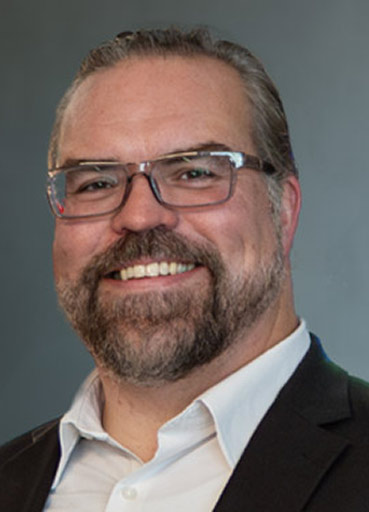
Shawn Meredith is recognized globally as a premier executive coach for scaling performance, with a track record that includes leaders at organizations such as Facebook, Deloitte, American Express, Macy’s, Warner Bros., and Chevron. He is known for challenging high-performing executives to find additional gears and multiply their impact, producing results that show up quickly and sustainably. Shawn’s approach blends performance science with hands-on management experience, and his advanced degrees in psychology help him understand the mindsets and behaviors that drive high performance. As FPG’s Director of Coaching, he sets the coaching standard and develops the team to deliver the same level of precision and impact with clients. Based in Pittsburgh, Shawn enjoys outdoor time with his wife, Amanda, and coaching various sports for their two boys, Isaac and Reuben.